
December 31, 2025
Sensing the World: A Guide to Healthy Sensory Growth in the First Year
Sensory development is the process by which a baby learns to make sense of the world through sight, sound, touch, taste, and smell. In the first 12 months, these systems undergo a massive transformation, moving from a blurry, muffled existence to a high-definition experience of their environment. While it is tempting to use "educational" toys to speed this up, the healthiest development occurs through natural, responsive interaction within a calm environment.
At birth, a baby’s sensory world is focused on proximity. Their vision is limited to about 8 to 12 inches, a distance to a caregiver’s face during feeding, and they prefer high-contrast patterns like black and white. By four months, they begin to track moving objects and develop depth perception. By twelve months, their vision is nearly as clear as an adult's.
Hearing is actually well-developed before birth, but in the first few months, babies learn to distinguish between speech sounds and background noise. By six months, they can often localize sounds, turning their heads accurately toward a noise. Touch is the most mature sense at birth: babies use their mouths and hands to explore textures, which is why "mouthing" objects is a critical developmental milestone rather than just a phase of teething.
Healthy sensory development doesn't require expensive gadgets, but "sensory nutrition" in the form of varied but gentle experiences. For a newborn, simply looking at your face or hearing you hum is enough stimulation. As they grow, you can introduce different textures (silky fabric vs. a bumpy ball) or different sounds (crinkling paper or a gentle bell).
The risk in modern parenting is overstimulation. A baby’s nervous system is easily overwhelmed by "electronic" toys that feature bright flashing lights and loud, artificial sounds. Overstimulation manifests as the baby turns away, arching their back, closing their eyes, or becoming inconsolably fussy. To prevent this:
Follow the "One Sense at a Time" rule. If you introduce a baby to a new texture, keep the room quiet. If you are listening to new music, keep the visual environment simple.
Prioritize natural stimulus. Real-world sounds (birds, rain, a wooden spoon on a pot) and natural light are far superior to digital screens or plastic light-up toys for building a resilient nervous system.
Observe "Processing Time". After showing a baby something new, wait. Give them time to look, look away, and look back. This "pause" is where the actual neural connections are made.
While every baby develops at their own pace, there are "red flags" that suggest a sensory system might need professional evaluation. Early intervention is key to supporting a child's long-term learning and social abilities. You should consult your pediatrician if you notice:
Vision: the baby doesn't track a moving object with both eyes by 4 months, or if one eye consistently turns in or out.
Hearing: the baby doesn't startle at loud noises, doesn't turn toward sound by 6 months, or stops babbling around the half-year mark.
Touch/Sensory processing: the baby becomes extremely distressed by normal touch (like being held or bathed) or is unusually limp or stiff when moved.
Engagement: the baby consistently avoids eye contact or does not respond to social cues like smiling by 3 to 4 months.
By providing a calm, responsive environment, you allow your baby’s senses to unfold naturally. Your role is not to "train" their senses, but to be a safe "anchor" as they explore the vast, exciting world around them.
A gentle reminder: The content in this article is for informational purposes only and is not intended to be a substitute for professional medical advice, diagnosis, or treatment. Always seek the advice of your pediatrician or another qualified health provider with any questions you may have regarding a medical condition. If you are facing a problem that feels sharp, persistent, or overwhelming, reaching out for professional help is a sign of strength.
Related Articles

January 2, 2026
The Evolution of Infant Bones: From Cartilage to Bone
Support the natural ossification of your baby’s skeletal system by understanding the protective measures required for their flexible, developing frame. Learn to prevent common positional issues and joint injuries through careful handling and varied movement, ensuring a strong foundation for future growth.
December 24, 2025
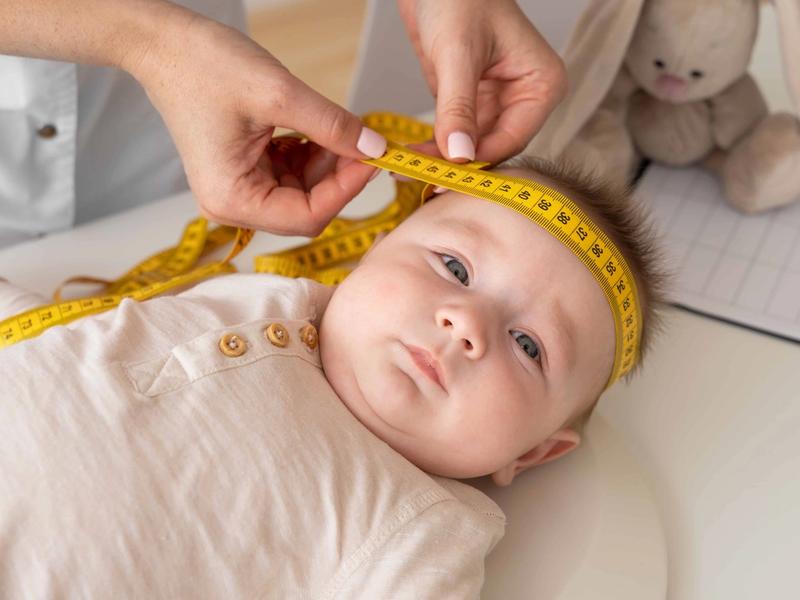
Measuring and weighing your baby: techniques for accuracy
Learn the technical skills required to accurately monitor your baby’s physical growth between doctor visits. Discover the instructions for obtaining precise weight and length measurements, including the necessary equipment and methods. At the same time, you should always rely on your pediatrician regarding any conclusions or actions regarding the baby's development.
December 17, 2025
Talking to your baby: why it matters and how to do it (even when you feel awkward)
Talking to a baby can feel awkward, but simple narration actively builds their brain by teaching the rhythm of language. Also, it allows to create a back-and-forth connection that lays the foundation for future communication. However, respecting their need for quiet breaks is just as important as the conversation itself.
December 14, 2025
Playing with your 9-12 month old: encouraging curiosity, cruising, and first words
The 9-12 month window marks an exciting shift as your baby becomes a true explorer. This guide helps you channel their intense curiosity into simple "problem-solving" games, cruising, and communication development.