December 24, 2025
Measuring and weighing your baby: techniques for accuracy
Accurately tracking a baby’s growth is one of the most tangible ways to monitor their health and nutritional progress. While your pediatrician will perform formal measurements during well-baby visits, many parents choose to track these metrics at home. However, measuring an infant is technically challenging due to their constant movement and the specific equipment required for accuracy.
To get a reliable weight at home, you must use a dedicated digital infant scale. Standard adult scales are not sensitive enough to track the small, ounce-by-ounce gains that are critical in the first few months.
Technique for Weighing:
Zero the Scale: place the scale on a hard, flat surface (never carpet). Turn it on and ensure it reads "0.0" before placing the baby on it.
The "Nude Weight": for the most accurate data, weigh the baby completely naked. A dry diaper can add significant weight, and a wet one even more, which can skew your tracking.
Safety First: always keep one hand hovering just above the baby without touching them to prevent falls, as infants can unexpectedly wiggle or roll off the scale tray.
Average the Reading: if the baby is very active, the numbers may jump. Many infant scales have a "hold" or "average" function that locks in a weight despite movement.
Technique for Measuring Length: Measuring length is significantly more difficult than weighing because babies naturally keep their legs tucked in a flexed position. It is nearly impossible to get an accurate length measurement alone. One person should hold the baby’s head gently against a flat headboard or the top of a measuring mat. The second person should gently straighten the baby’s legs so the knees are flat and the feet are flexed (toes pointing toward the ceiling). Then measure from the very top of the head to the bottom of the heel. Using a soft measuring tape is often inaccurate because it follows the curves of the body; a rigid measuring board or a specialized infant mat is the gold standard.
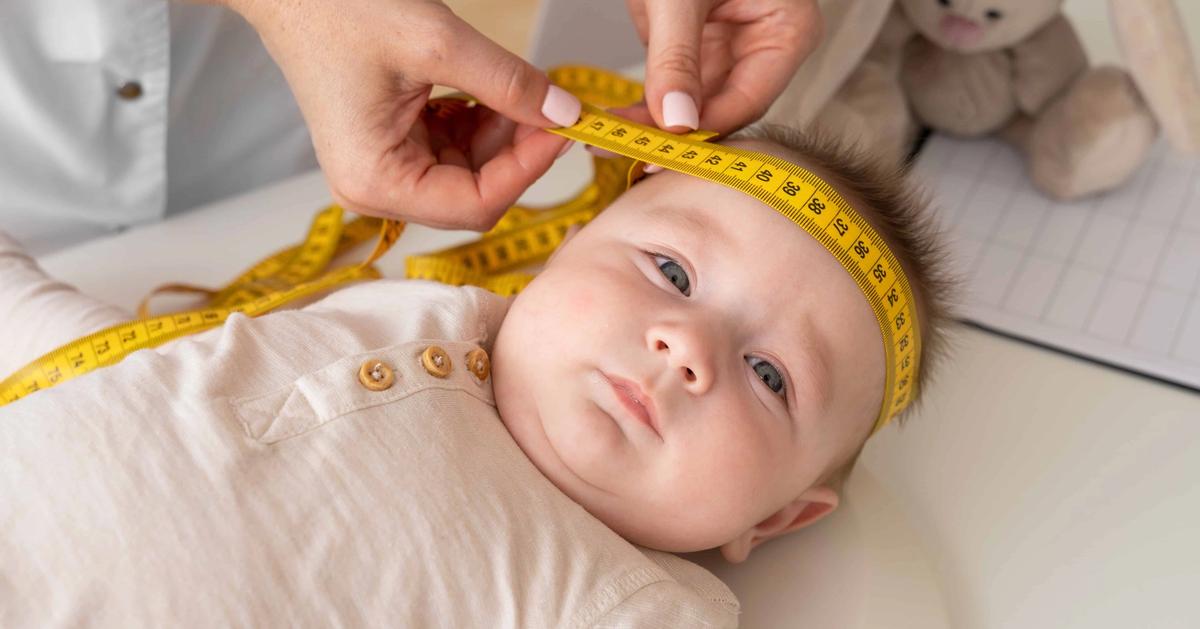
Technique for Head Circumference: Head circumference is a vital indicator of brain development and skull growth.
The Tape Placement: use a flexible, non-stretchable measuring tape.
The Landmark: place the tape across the widest part of the forehead (just above the eyebrows), above the ears, and around the most prominent part of the back of the head (the occiput).
Pull Snugly: the tape should be snug enough to compress any hair but not tight enough to indent the skin. Take the measurement three times and use the average.
Equipment and Data Interpretation
While home tracking can offer peace of mind, it should never replace professional monitoring. Pediatricians use standardized growth charts (such as those from the WHO or CDC) to plot these numbers. It is important to remember that a single data point is less important than the growth curve, the trend of your baby's growth over time.
If you notice a sudden "plateau" (no growth over several weeks), a drop in weight, or a measurement that seems to fall off your baby's established curve, do not attempt to self-diagnose by changing feeding habits. Instead, bring your home data to your pediatrician. They can verify the measurements with clinical-grade equipment and determine if the change is a normal variation or requires medical investigation.
A gentle reminder: The content in this article is for informational purposes only and is not intended to be a substitute for professional medical advice, diagnosis, or treatment. Always seek the advice of your pediatrician or another qualified health provider with any questions you may have regarding a medical condition. If you are facing a problem that feels sharp, persistent, or overwhelming, reaching out for professional help is a sign of strength.
Related Articles

January 2, 2026
The Evolution of Infant Bones: From Cartilage to Bone
Support the natural ossification of your baby’s skeletal system by understanding the protective measures required for their flexible, developing frame. Learn to prevent common positional issues and joint injuries through careful handling and varied movement, ensuring a strong foundation for future growth.
December 31, 2025
Sensing the World: A Guide to Healthy Sensory Growth in the First Year
Facilitate healthy sensory growth by prioritizing natural, responsive interactions over high-tech stimulation. Learn strategies to prevent sensory overload and identify the developmental "red flags" that warrant professional attention.

December 17, 2025
Talking to your baby: why it matters and how to do it (even when you feel awkward)
Talking to a baby can feel awkward, but simple narration actively builds their brain by teaching the rhythm of language. Also, it allows to create a back-and-forth connection that lays the foundation for future communication. However, respecting their need for quiet breaks is just as important as the conversation itself.
December 14, 2025
Playing with your 9-12 month old: encouraging curiosity, cruising, and first words
The 9-12 month window marks an exciting shift as your baby becomes a true explorer. This guide helps you channel their intense curiosity into simple "problem-solving" games, cruising, and communication development.