December 19, 2025
Creating a safe space: where and how to place your baby for sleep and rest
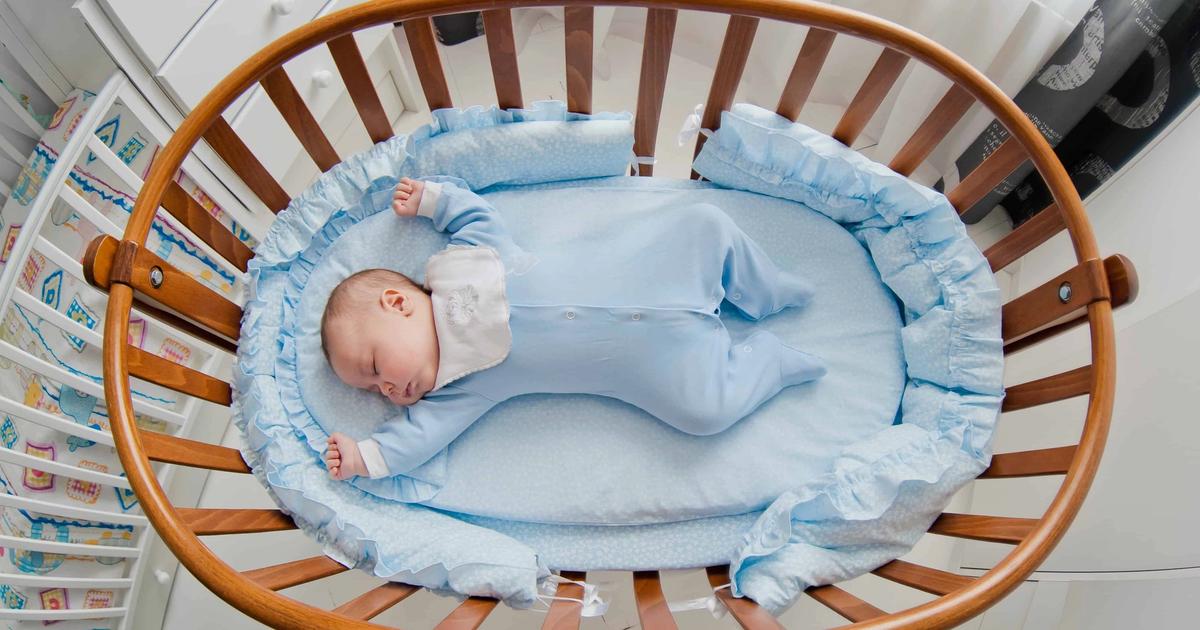
One of the most frequent sources of confusion for new parents is deciding where a baby should sleep and play. Between medical safety recommendations and the practical reality of needing to monitor a baby while managing a household, the "right" location for a cradle or bassinet often feels like a moving target. The goal is to create an environment that prioritizes safety while acknowledging the logistical needs of the family.
The gold standard for infant sleep safety, as recommended by major pediatric organizations, is for the baby to sleep in the parents' room, but in their own separate sleep space, for at least the first six months. This is known as "room-sharing" and is distinct from "bed-sharing". Having the baby within arm's reach but on a separate, firm surface has been shown to significantly reduce the risk of Sudden Infant Death Syndrome (SIDS). It allows for easier nighttime feedings and immediate monitoring of the baby’s breathing and movements without the risks associated with an adult bed.
While the parents' room is the safest primary location for nighttime, many families wonder if a baby should always sleep in the same place. Consistency can be helpful for establishing long-term sleep associations, but in the early months, it is often more practical to have multiple safe sleep "stations" throughout the house. A portable bassinet or a "pack-and-play" can be placed in the living room or kitchen to allow the baby to rest safely while you are nearby. The critical factor is not the specific room, but the safety of the surface itself. Regardless of where the baby is placed, it must always be a flat, firm surface free of pillows, loose blankets, or soft toys.
A common pitfall is allowing a baby to sleep in "containment" devices that are not designed for sleep, such as swings, bouncers, or car seats when they are not in a vehicle. These devices often position the baby at an incline, which can cause their heavy head to fall forward, potentially obstructing their airway. If your baby falls asleep in a swing or bouncer, the safest course of action is to move them to a flat, firm sleep surface as soon as possible. A safe space is defined by its flatness and lack of obstructions, rather than its location in a specific room.
As the baby grows and becomes more aware of their surroundings, you may notice that they become easily overstimulated by the lights and sounds of a busy household. This is often when parents begin to transition the baby to a separate nursery for naps or nighttime sleep. If you choose to move the baby to a separate room, a high-quality baby monitor becomes an essential tool. However, even with a monitor, the physical proximity of room-sharing for the first six months remains the safest recommendation.
Finally, consider the environmental factors of the space, such as temperature and airflow. The room should be kept at a comfortable temperature, typically between 68 and 72 degrees Fahrenheit (20 to 22 degrees Celsius). Using a small fan to keep air circulating helps to ensure the proper level of oxygen in the room. By focusing on a firm, flat surface and maintaining proximity during the first half-year, you can ensure your baby has a safe space to grow and rest, regardless of the layout of your home.
Related Articles
January 2, 2026
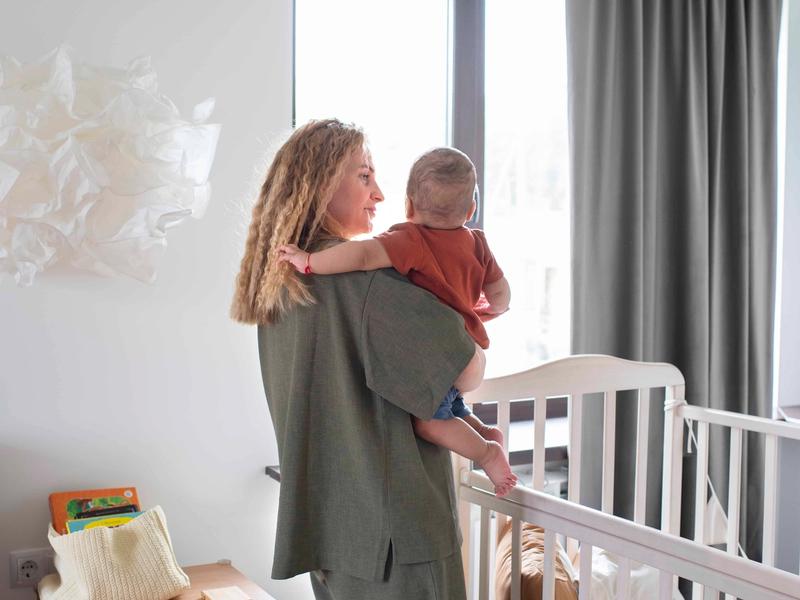
Transitioning from bassinet to crib: timing, safety, and strategy
Identify the critical physical and developmental milestones that signal it is time to upgrade your baby’s sleep environment to ensure their continued safety. Discover practical strategies to smooth this transition to minimize disruption and maintain a secure routine for your family.
December 22, 2025
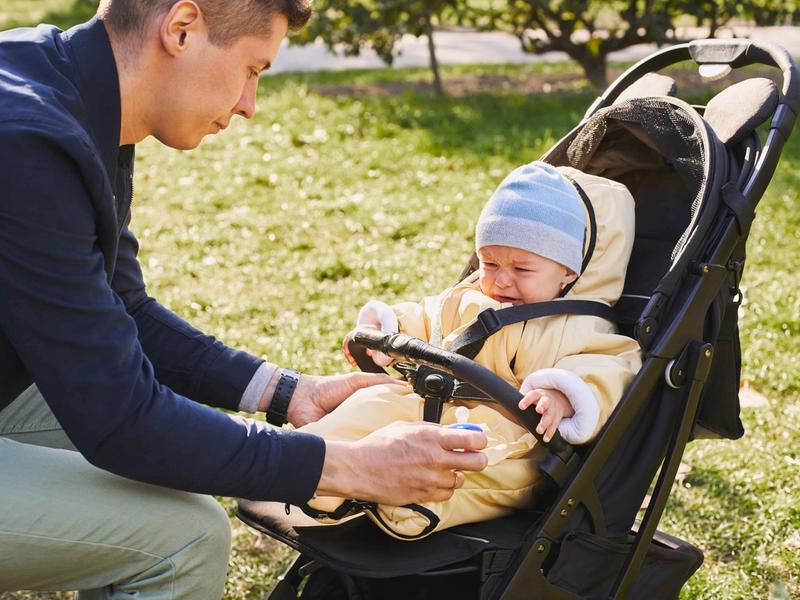
Heading Out: Determining Readiness for Your Baby’s First Walks
This guide is about determining the readiness and safety conditions for your baby’s first outdoor walks. Learn how to navigate weather challenges and crowd risks, and discover practical tips for dressing your baby and choosing the right gear for a successful outing.
December 19, 2025
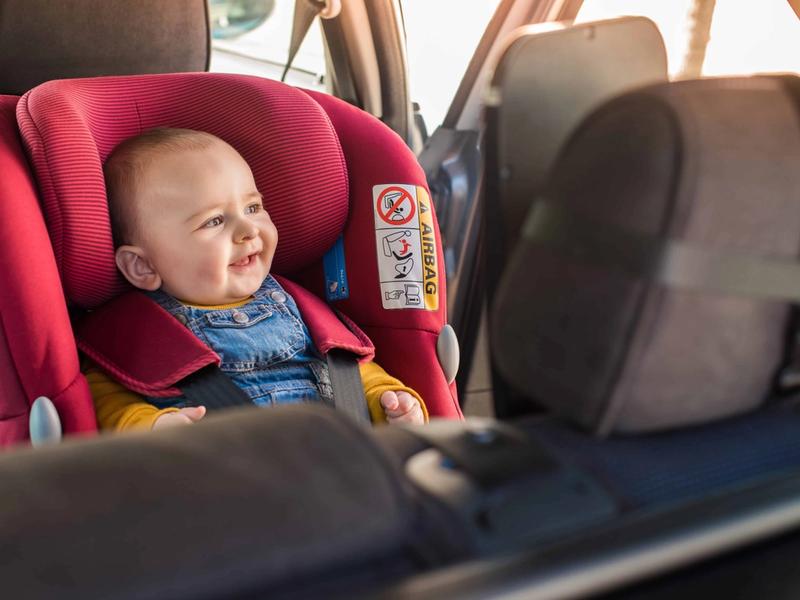
Car safety for your baby: a practical guide to seats, installation, and winter travel
Ensuring your baby's safety on the road is critical, and is mainly done through proper car seat usage and installation. Learn the rules for safe setup and positioning, and discover how to test your installation for stability, as well as other practical recommendations.

December 19, 2025
Baby dressing: a practical guide to comfort, climate, and smart shopping
This guide will help you build a practical, budget-friendly wardrobe that skips the fluff and focuses on comfort and safety. Discover tips on how to dress your baby safely for any weather, way to check for overheating and learn why envelope necklines are the secret to handling diaper blowouts without the mess.