December 11, 2025
Baby's developing mind: understanding cognitive leaps and their impact
Sudden periods of fussiness or sleep disruption in your baby are often not random but predictable signs of major leaps in their cognitive development. Understanding what's happening in your baby's brain can help you respond with more patience and insight.
Many parents interpret these challenging phases as a regression or a problem to be solved. In reality, this fussiness is often a temporary side effect of incredible brain growth as your baby acquires a completely new way of perceiving and interacting with the world.
During the first 2-3 months, your baby's world is a blur. The first major cognitive leap is one of perception. Their brain develops the ability to see more clearly and to recognize simple patterns and sequences. You may notice your baby staring intently at a ceiling fan, the stripes on your shirt, or their own hands. They begin to anticipate routines, calming down when they see a bottle being prepared because they now connect that pattern of events with feeding. This new, more detailed world can be very stimulating, which can sometimes make it harder for your baby's brain to "switch off" for sleep.
The next major leap happens in around 4-6 months after birth and is connected to the understanding that they are a separate person who can act upon the world. This is the dawn of cause and effect. Your baby will start to purposefully bat at toys to make them swing, drop things from their high chair to watch them fall, and babble to see how you respond. They are running experiments to see how their actions influence their environment. This leap is famously linked to the 4-month sleep regression. As your baby's sleep cycles mature, their newly active brain can make it difficult for them to fall back asleep between cycles.
Next, there is a massive cognitive milestone in 8-10 months after birth where your baby understands that people and things continue to exist even when they can't be seen, a concept called object permanence. This is when separation anxiety often peaks. When you leave the room, your baby now knows that you are gone, which can be distressing. This can make bedtime a struggle, as they now understand you are leaving in a way they didn't before. They may also be so excited by their new ability to pull to stand that they will practice it in the crib instead of sleeping.
By recognising that these difficult phases are tied to exciting new cognitive abilities, you can reframe them. You're not just surviving a fussy week, but witnessing the incredible construction of your baby's mind.
A gentle reminder: The content in this article is for informational purposes only and is not intended to be a substitute for professional medical advice, diagnosis, or treatment. Always seek the advice of your pediatrician or another qualified health provider with any questions you may have regarding a medical condition. If you are facing a problem that feels sharp, persistent, or overwhelming, reaching out for professional help is a sign of strength.
Related Articles

January 2, 2026
The Evolution of Infant Bones: From Cartilage to Bone
Support the natural ossification of your baby’s skeletal system by understanding the protective measures required for their flexible, developing frame. Learn to prevent common positional issues and joint injuries through careful handling and varied movement, ensuring a strong foundation for future growth.

December 31, 2025
Sensing the World: A Guide to Healthy Sensory Growth in the First Year
Facilitate healthy sensory growth by prioritizing natural, responsive interactions over high-tech stimulation. Learn strategies to prevent sensory overload and identify the developmental "red flags" that warrant professional attention.
December 24, 2025
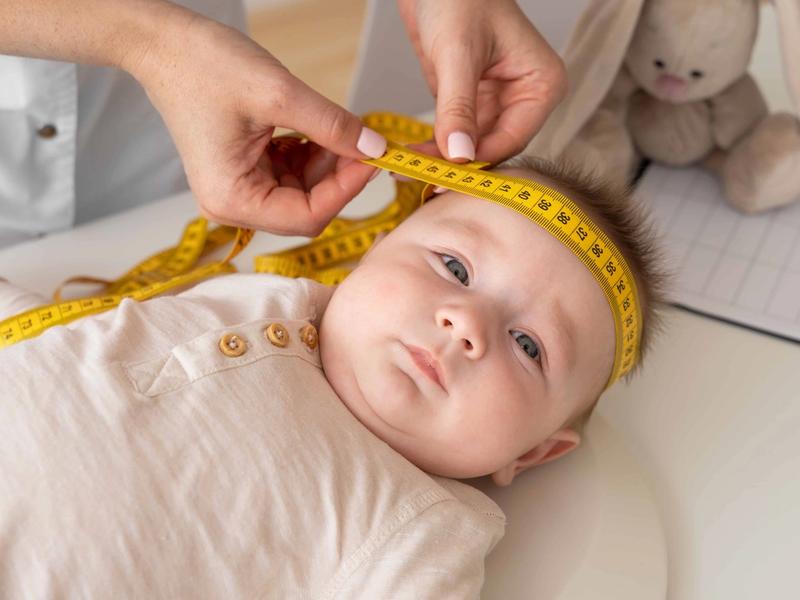
Measuring and weighing your baby: techniques for accuracy
Learn the technical skills required to accurately monitor your baby’s physical growth between doctor visits. Discover the instructions for obtaining precise weight and length measurements, including the necessary equipment and methods. At the same time, you should always rely on your pediatrician regarding any conclusions or actions regarding the baby's development.

December 17, 2025
Talking to your baby: why it matters and how to do it (even when you feel awkward)
Talking to a baby can feel awkward, but simple narration actively builds their brain by teaching the rhythm of language. Also, it allows to create a back-and-forth connection that lays the foundation for future communication. However, respecting their need for quiet breaks is just as important as the conversation itself.