December 11, 2025
From chaos to routine: progress from overwhelm to a stable daily flow (first 12 weeks)
The first few months with a new baby can feel like a blur of unpredictable moments, but slowly and surely, a gentle rhythm will begin to emerge from the chaos. It's incredibly common to feel stuck in a cycle of constant reaction, wondering if you'll ever find a predictable pattern. This feeling is often made worse by the pressure to follow a strict schedule, which can lead to a deep sense of guilt and second-guessing when your baby's needs don't align with the clock.
A frequent mistake is trying to impose a rigid, time-based schedule on a newborn before they are ready. This struggle against your baby's natural rhythm can increase the mental load and anxiety for everyone. The goal is not to force a routine, but to discover the one that your baby is already trying to show you. This means working with your baby, not trying to control them.
In these early weeks, it's far more effective to focus on a predictable sequence of events rather than a strict timetable. The simple pattern of "eat, play, sleep" on a repeating loop is the most fundamental building block of a routine. By focusing on "what comes next" instead of "what time is it", you create a sense of order and predictability for your baby without the immense pressure of watching the clock.
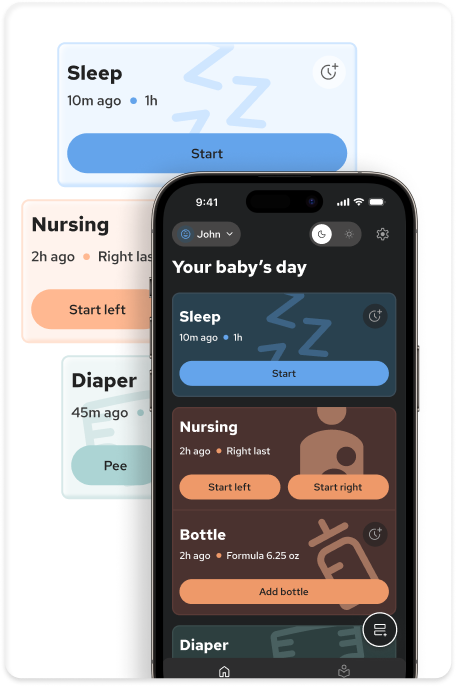
As you follow this sequence, you can start to establish one or two "anchor" events that happen at a roughly similar time each day. This might be a consistent bedtime ritual, like a bath and a story, or a simple morning routine that starts the day. These anchors provide a sturdy frame for your day, while everything else can flow more flexibly in between. This is also where tracking can become your best tool for discovery. Use it not to enforce a schedule, but to learn your baby’s unique cues and patterns, allowing you to respond to their needs more proactively.
It is crucial to remember that this is a gradual process, not an overnight transformation. There will be days that feel perfectly in sync and days that revert to total chaos, and both are normal and expected parts of the journey. The aim is to find a gentle, flexible rhythm that serves your family, not to live up to an external standard that creates more stress and guilt.
Building a routine is a process of discovery you embark on with your baby, not a test you have to pass. By focusing on their cues and establishing simple, repeatable sequences, you will slowly and confidently guide your family from a state of overwhelm to a calm and stable daily flow.
A gentle reminder: The content in this article is for informational purposes only and is not intended to be a substitute for professional medical advice, diagnosis, or treatment. Always seek the advice of your pediatrician or another qualified health provider with any questions you may have regarding a medical condition. If you are facing a problem that feels sharp, persistent, or overwhelming, reaching out for professional help is a sign of strength.
Related Articles

December 18, 2025
Baby nail care: a practical guide to tools, timing, and safety
The process of safely managing your newborn's rapidly growing nails is quite important, but is often overlooked. Learn how to choose the right tools for your comfort level, discover techniques to manage a wiggly baby, and find out the immediate steps to take if you accidentally nick the skin.
December 16, 2025
Pumping workflow that sticks: parts, sanitizing, storage
Managing the constant cycle of cleaning and organizing pump parts can be one of the most demanding parts of the day. We recommend the time-saving strategy to ensure you keep up with this routine easily.
December 15, 2025
Time and chores without burnout: make the day doable
To avoid burnout, radically simplify your standards by accepting a "good enough" home that prioritizes health and safety over tidiness. Instead adopt a flexible cleaning approach and improve routines efficiency to manage more in less time and keep your mental and physical resource for your baby.
December 15, 2025
Build a routine that survives real life: windows, anchors, and recovery
Stop chasing the myth of a perfect, clockwork schedule that only leads to stress. Instead, build a resilient routine that allow your day to bend without breaking. Learn how to create a simple recovery plan for when things inevitably go sideways, ensuring you have structure without the pressure.